Entries in Category O.S.S.I. Book Club

Essays of Michel de Montaigne, Book 2

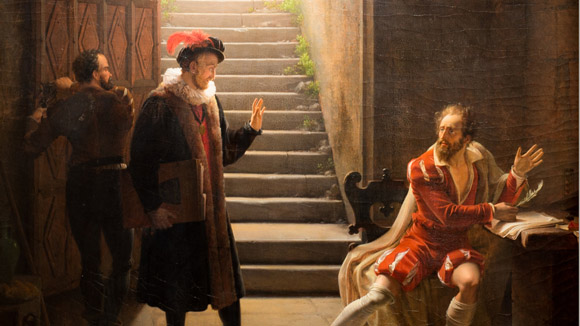
Fleury François Richard, Montaigne Visiting Torquato Tasso in Prison

Virtue refuses facility for her companion ... the easy, gentle, and sloping path that guides the footsteps of a good natural disposition is not the path of true virtue. It demands a rough and thorny road.

After a brief holiday in the sun, we return to our scholarly towers and pick up, once again, The Essays of Montaigne. Although usually bound as one volume, his 107 total essays were published as three books, which we are reading one at a time, with breaks in between. This month, we are only reading the second book. If you didn't attend our June meeting for Book One, don't worry, you really can begin at any point. So pick a translation and get started on Book Two; it's the longest of the three so plan accordingly!

Sun and Steel, Yukio Mishima

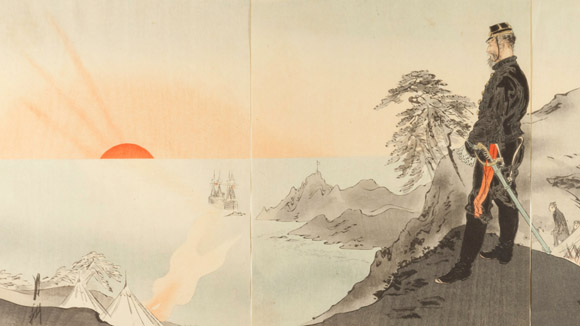
Ogata Gekko, Picture of Officers and Men Worshipping the Rising Sun While Encamped in the Mountains of Port Arthur

If my self was my dwelling, then my body resembled an orchard that surrounded it. I could either cultivate that orchard to its capacity or leave it for the weeds to run riot in. I was free to choose, but the freedom was not as obvious as it might seem. Many people, indeed, go so far as to refer to the orchards of their dwellings as "destiny".

One day, it occurred to me to set about cultivating my orchard for all I was worth.

Here's a summer read, a short palate cleanser before we dive back into Montaigne, and as a special treat, it's not even that old. 1968! Our youngest book yet. I'm bending our rules hard this time.

Essays of Michel de Montaigne, Book 1

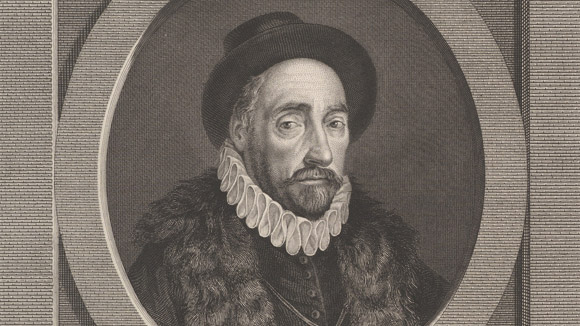
Portrait of Michel de Montaigne, Augustin de Saint-Aubin, 1774

Thus, reader, myself am the matter of my book: there’s no reason thou shouldst employ thy leisure about so frivolous and vain a subject.

In 1570, Michel de Montaigne, then 37, retired from his law career. A year later, he began his real work. Sequestering himself in his study (literally a tower), he set about inventing, and even immediately perfecting, a new literary form: the essay.

The Complete Works of Epicurus

Photo by Batatolis Panagiotis

It is impossible to live pleasantly without living prudently, honourably, and justly and impossible to live prudently, honourably, and justly without living pleasantly.

Epicurus was a very prolific philosopher, authoring over 300 works. This month, we will read all of them.

All of the ones that have survived.

Had you going there, didn't I? As it happens, there's not that much left, so with very little effort, by the end of the month you will have read as much Epicurus as anyone alive.

Epistles, Horace

At Maecenas' Reception Room, Stefan Bakałowicz, 1890

He who puts off the hour to begin living rightly;
Is like the yokel who stands at the stream with a sigh:
“I can't get across. I'll wait here till it runs dry.”
Meanwhile, it flows, forever flows on and rolls by.

Horace's Epistles are collections (two of them, but almost always published together) of letters addressed to various people and composed in hexameter verse. They are full of useful moral maxims, but this is poetry, not carefully argued philosophy with a definite point of view. Nonetheless, the mature Horace of the Epistles is definitely reaching out beyond beauty, to get a hold on truth and goodness as well:

So now I lay aside my verses and all other toys. What is right and seemly is my study and pursuit, and to that am I wholly given.

Archives: