Essays of Michel de Montaigne, Book 3
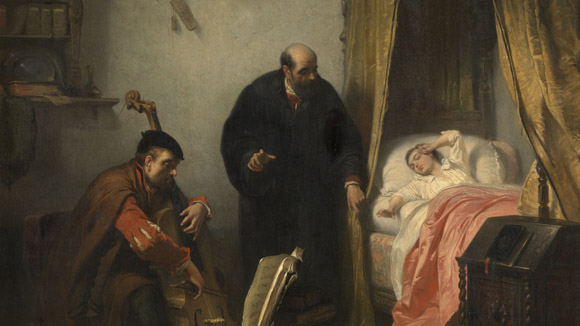
Edouard Hamman, The Awakening of Michel de Montaigne
When the mind is satisfied, that is a sign of diminished faculties or weariness. No powerful mind stops within itself: it is always stretching out and exceeding its capacities.
Still unsatisfied, still stretching out, we come to it at last: the third and final book of Montaigne's essays. If you've stuck with me from the beginning, I salute you, although reading Montaigne is really its own reward. If you're here for the first time, I welcome you. This one you really can pick up anywhere; there is no shame in starting on book three and reading the others whenever you can, so don't be shy! Montaigne, after all is one of the fun ones. Here is another taste of the fun we'll have in October:
The ridiculous and simple look of another always warns and advises me; that which pricks, rouses and incites much better than that which tickles. The time is now proper for us to reform backward; more by dissenting than by agreeing; by differing more than by consent.
Indeed, the time IS proper for just that. So bring your dissent to Vino's on October 26, at 7:00 PM, and be ready to incite.

 2026
2026 Subscribe with RSS
 Flickr
 Twitter
 Google +
 LinkedIn