Letters to a Young Poet, Rainer Maria Rilke
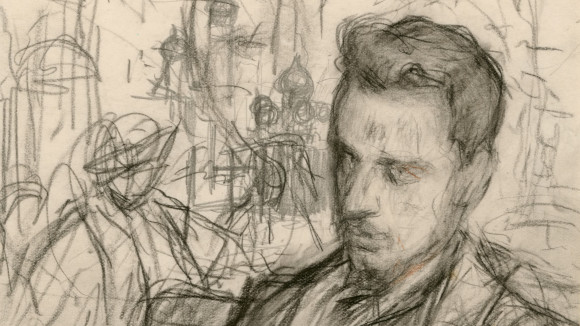
Portrait drawing of Rainer Maria Rilke, Leonid Pasternak, 1901
Do you remember how this life of yours longed in childhood to belong to the 'grown-ups'? I can see that it now longs to move on from them and is drawn to those who are greater yet. That is why it does not cease to be difficult, but also why it will not cease to grow.
It's been a while. Let's ease back into our reading with a short one, a miniature jewel: the poet Rainer Maria Rilke's ten letters written to Franz Xaver Kappus in the years 1903–1908 (Yes, that's very modern by our standards. We'll let it slide this time). Kappus, an unhappy officer cadet who dreamed of living the life of a poet instead, sent some of his verses to the already published and somewhat famous (although almost as young as himself) poet Rilke asking for criticism and advice. He didn't get criticism (“any critical intention is too remote from me”, says Rilke) but of advice he got plenty. And what advice it is!
Here is Rilke on the use of suffering:
Why should you want to exclude from your life all unsettling, all pain, all depression of spirit, when you don't know what work it is these states are performing within you?
Rilke on relating to one's parents:
love in them a form of life different from your own and show understanding for the older ones who fear precisely the same solitude in which you trust.
Rilke on becoming an artist:
Everything must be carried to term before it is born. To let every impression and the germ of every feeling come to completion inside, in the dark, in the unsayable, the unconscious, in what is unattainable to one's own intellect, and to wait with deep humility and patience for the hour when a new clarity is delivered: that alone is to live as an artist
Solitude, patience, inward attention—Rilke's prescription for Kappus could not be better suited to us, in our noisy, crowded, and above all, distracted age.
There are many translations from the German. I will be reading Charlie Louth's Penguin Classics Editions, which also includes Rilke's The Letter From the Young Worker.
We will meet at Vino's as usual, and, in Rilke's phrase from “Let This Darkness Be a Bell Tower”, turn ourselves to wine. See you there.
 2026
2026 Subscribe with RSS
 Flickr
 Twitter
 Google +
 LinkedIn