Welcome! I am an engineer, programmer, designer, and gentleman. You may be interested in some of my electrical and mechanical projects. Take everything you read here with a grain of salt and remember to wear your safety glasses.

Letters to a Young Poet, Rainer Maria Rilke

Portrait drawing of Rainer Maria Rilke, Leonid Pasternak, 1901

Do you remember how this life of yours longed in childhood to belong to the 'grown-ups'? I can see that it now longs to move on from them and is drawn to those who are greater yet. That is why it does not cease to be difficult, but also why it will not cease to grow.

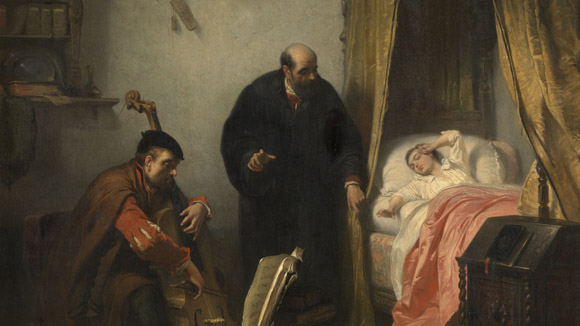
It's been a while. Let's ease back into our reading with a short one, a miniature jewel: the poet Rainer Maria Rilke's ten letters written to Franz Xaver Kappus in the years 1903–1908 (Yes, that's very modern by our standards. We'll let it slide this time). Kappus, an unhappy officer cadet who dreamed of living the life of a poet instead, sent some of his verses to the already published and somewhat famous (although almost as young as himself) poet Rilke asking for criticism and advice. He didn't get criticism (“any critical intention is too remote from me”, says Rilke) but of advice he got plenty. And what advice it is!

A Logo for Sadamasild

In late 2022 I designed this logo for Estonian musical ensemble Sadamasild.

Sadamasild

Sadamasild logo, December 2022

The name "Sadamasild" means "Sadam's Bridge", after frontman and songwriter Marek Sadam. The arch formed by the crossbars of the A's in the logo is meant to read as a bridge, at least to an Estonian audience that understands the name.

Saar ja Sadam Logo Design

SAAR ja SADAM

Here's a logo I designed for Marek Sadam and Mikk Saar's band Saar ja Sadam, with wider and narrower variations for different applications. For non-Estonian speakers: "Saar" means "island" and "Sadam" means "harbor", so the last names of these gentlemen naturally suggest nautical ideas to an Estonian audience.

As with my logo designs for the LEP festivals in 2019 and 2021 (postponed until 2022 for COVID), I've prepared a proposal document with some details and other variations, including text-only versions without the logomark elements, suitable for reproduction at small sizes.

I can't wait to see these on t-shirts!

Using a Laser Pointer and 3D Printing to Align Electrical Conduit

As part of my ongoing garage renovation I installed new LED light fixtures on the ceiling. This required me to rebuild the existing network of surface-mounted conduits and brought to light some disturbing discoveries about the state of the electrical system in the garage I've lived next to, in blissful ignorance, since 2019. For more on that, watch the video above and learn how NOT to wire a garage with an extra circuit.

In addition to the downright hazardous faults I'm referring to was a class of problems that rise to the level of the merely annoying. One of those: the ceiling box that the lights depend on was rotated by a small but immediately apparent angle from the walls of the building. If, as planned, I installed the linear LED lamps using conduits connected to the box, the pattern of lights would not be perpendicular to anything else, which I obviously could not accept.

On the Aesthetic Education of Man, Schiller

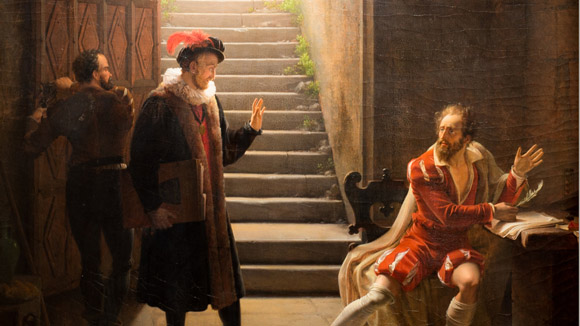
A Painter's Studio, Louis-Léopold Boilly, c. 1800

But how does the artist secure himself against the corruptions of his time, which everywhere encircle him? By disdaining its opinion. Let him look upwards to his own dignity and to Law, not downwards to fortune and to everyday needs.

It is common to say that philosophy is about three things: the true, the good, and the beautiful. We've sampled widely across philosophy, but most of our reading has been about the good, because we are looking for practical advice on how to live. Modern academic philosophy, by contrast, is mostly about the true, because you can endlessly turn out answers to “how do we know what we know?” and academics need jobs, after all.

Beauty, however, is the most neglected of the trio. Maybe because it's easy to dismiss as an unnecessary luxury, something we should give up for the sake of some other worthy goal. Maybe because of the slippery task of trying to define what it is and the subsequent escape into subjectivity. You've heard all that noise about the “eye of the beholder”, “that's YOUR opinion”, “one man's trash” and so forth.

But let's not give the bromides too much credit. One man that definitely didn't was the 18th century German Friedrich Schiller, who wrote On the Aesthetic Education of Man (sometimes rendered in English as Aesthetical Letters or several similar variations), a work that respects Beauty as at least equal to her sisters Truth and Goodness. Shocked by the descent of the French Revolution, which seemed to begin with high-minded ideals, into blood and madness, Schiller asks: how could this have been avoided? If political revolution doesn't work, what conditions are necessary to really produce human flourishing?

Archives: